Popular Posts

Showing posts with label How to Make a Terrarium. Show all posts

Wednesday, November 4, 2015

Pro Terrarium Designer Shares Tips

Photo by Lori Adams,
San Diego Union Tribune
 
 New York Botanical Garden terrarium expert Maria Colletti shares tips from her book "Terrariums: Gardens Under Glass" with San Diego Union Tribune readers. I paraphrase a few tips here, but be sure to read the whole article at the San Diego Union Tribune.

Free Plants: Collecting jade plant pups, succulent pups, or bits of moss from your yard or a park is a great way to obtain small plants to fuel your terrarium fever.  Just be sure to examine for bugs.

Best Face Forward: When placing your plants in your terrarium vessel, turn the plant in place so that its best side faces out.  Angle leaves or branches away from adjacent plants.

Friday, October 2, 2015

Q and A: Twigs in Moss


Fall is a great time to build a terrarium, to capture a bit of greenery in a bottle before things turn cold outside. My question for today comes from reader Kate:

Question: I bought some moss online. It's very healthy - I've just got it in a cookie sheet with some soil and pebbles, the whole affair sitting in a Ziploc bag that I can keep closed for humidity and then open it for awhile every day to get air. Now that I'm about to use it for a terrarium though, I see it has loads of (what look like) small brown decayed needles, and some tiny twigs. If I try to clean all that stuff out, I'm afraid that the entire sheet of moss will come apart (which I don't want to happen.) I'm thinking that all this detritus is decayed matter that's feeding the moss and keeping it healthy. Besides which, I'd never be able to pick it all out. So what do you think? Ok to just leave everything as is?

Answer: Your moss sounds healthy and well cared for! Storing it under plastic is a great method for quarantining your moss, to observe for insects or signs of mold. If the twigs and needles are in the dirt under the moss, wrapped up in the roots etc, it is probably fine to leave it there. It does sound like it is just part of the soil for your moss, and minimizing disruption of the moss while planting it in your terrarium will help it establish. Perhaps remove the larger pieces of twigs or pine needles if you do tear your moss into smaller pieces to place it in your terrarium.

Do you have a suggestion for dealing with twigs or pine needles in moss? Let's hear it in the comments?

Thursday, January 29, 2015

Terrarium Bauble Tips from Living Mi-Wey

Photo by Linda Davidson/The Washington Post

Michele Weymouth of Living Mi-Wey in Virginia shares a step-by-step guide for creating a succulent terrarium with the Washington Post. I love her signature terrarium bauble: something gold nestled among her terrarium plants.  Other great terrarium decoration ideas include small mirrors, figurines, glass marbles, or beach glass.

Wednesday, January 29, 2014

Melbourne Terrarium and Mossarium Designers


The Sydney Morning Herald shares terrariums from three prominent terrarium developers in the Melbourne area.  Designers including Petite Green, Miniscapes and Bosky have given a 70s fad a very contemporary sensibility.  Click through to visit the websites of these terrarium designers and to explore a quick set of instructions for designing your own terrarium.

‘‘Each terrarium is its own little world within the jar,’’ says Melbourne’s Petite Green, who also makes mossariums - terrariums that contain mostly moss and small figurines.

Monday, December 2, 2013

New Feature: 19 of the Best Plants for Terrariums

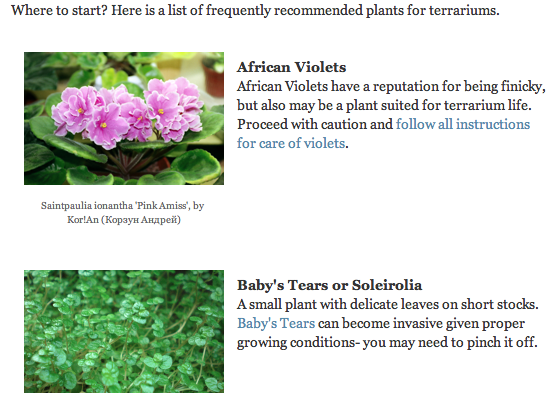
Check out the new and improved, comprehensive list of plants for terrariums.  If you are searching for a new type of plant to try in a terrarium, or are new to terrariums and are looking for plants that are suited for terrarium life, this list (complete with photos) should give you a good start.

Am I missing any plants that you have grown in a terrarium?  Tell me in the comments!

A screen capture of the list of terrarium plants

Tuesday, October 8, 2013

Marimo Moss Ball Terrariums from EclecticZenMarimo.com


Marimo Moss Ball Terrarium Kit from EclecticZenMarimo.com
Looking for a new kind of terrarium to test your skills?  I recently built a marimo ball terrarium from EclecticZenMarimo, whose kits are available on Etsy.  This was an easy terrarium to set up and would make a great gift for someone looking for an unusual aquarium or terrarium for their office or home. UPDATE: Act now and you can enter to win a Marimo terrarium of your own!  Just visit EclecticZenMarimo for your chance to win.

Drawing by Arni Einarsson,
Myvatn Research Station,  from Wikipedia
Marimo or marimo moss balls are aquatic, spherical masses of algae that float free in freshwater lakes.  Best know for their appearance in Lake Akan, marimo have achieved "national treasure" status in Japan.  Observers describe marimo as dancing or moving in aquariums, due to their ability to bob along in still water.  Marimo thrive in cold tap water and are thus well suited for a life in a small desktop aquarium.

How to Build a Marimo Terrarium

The EclecticZenMarimo kit contained gemstones, shells, a piece of seaweed, and two marimo balls

Marimo Terrarium Supplies

The basic marimo kit from EclecticZenMarimo included gemstones, shells, sand, a spherical bowl with feet, a piece of seaweed, and marimo balls!  The kit also includes instructions for how to build and maintain your marimo moss ball terrarium, as well as a stick and a small funnel.  This tiny funnel came in very handy, as you'll see in a minute.

Small funnel, ready for the sand.

The seaweed can bend for positioning
into the narrow opening of the bowl.

1. Add the sand, rocks and seaweed to the bowl

After rinsing out the bowl, use the funnel to pour in some sand and stones.  I used a piece of paper to funnel the sand into the small plastic funnel provided in the EclecticZenMarimo kit.

What if the seaweed is too big to fit?
The seaweed is flexible and can be slightly squeezed to position through the hole and into the sand in the bottom of the bowl.

What if the sand sticks to the sides of the bowl?
Don't worry if some sand sticks to the side of the bowl.  Once you pour in the water all the sand will be washed into the bottom of the bowl.


Simply pour water into the bowl
using the funnel.

2. Slowly pour water into the bowl

Pour cool tap water into the bowl very slowly.  Some of your sand and stones may get disrupted - simply use a stick or straw to reposition the items in the bottom of the bowl.

What about floating sand?
I noticed some sand floating at the top of the water after I added it to the bowl.  This sand will settle naturally over time, but if you want it looking tidy in a jiffy - I had luck gently tapping the floating sand with the stick.  The sand drifted down to the bottom of the bowl.


3.  Add the marimo balls to the bowl

Nothing fancy here- just pop your marimo moss balls into the water.  Marimo will need fresh water once a week.

I will post again soon with more news about how my marimo balls are adapting to office life!

Marimo happy in their new home.

Monday, September 2, 2013

Q and A: Soil and Sand Ratios for Terrariums

Thanks to reader Heather for these questions.

Question: 


I am writing with two easy questions:

1) What is the soil/sand ratio for most terrariums? You have mentioned two different ratios so I want to be sure.

In most you say it's 2:1 soil to sand. However, in the "Operation Diagnose" area (the most recent one on your pages) you say 1:1.

2) Is Miracle Gro's basic potting soil ok to use? One of the ingredients is peat moss and I know you warned against it in Operation Diagnose. However, I know some plants do well in it; I used it with the last terrarium (first I've made), and it did ok until I killed it with spray fertilizer after about a year.

I hope you can help me - I am making a 10 gal terrarium for work (bio labs) and want to do it right.

Answer:

As your terrarium is on the larger size I think a ratio of 2 parts soil to 1 part sand will work best.  The sand speeds up drainage in smaller terrariums but since you are working with a larger quantity of "stuff" (and probably larger plants), 2 parts soil will probably provide more nutrients for a longer amount of time.

Potting soil mix should work fine.  The peat moss retains moisture - which works great for a potted plant that might not get watered as frequently but can contribute to problems in smaller terrariums.  As long as you have the one part sand in there it should all balance out.  I'd also stress to build a large drainage level with pebbles and charcoal.  I'd make it at least an inch deep or more in a 10 gal terrarium- it'll help give water space to "breathe" at the bottom of your contained environment and should prevent root rot from standing water, etc.

Tuesday, April 23, 2013

Build a Balloon Terrarium

Image by Comita,
from commons.wikimedia.org

A terrarium craft is a great way to introduce children to the idea of an ecosystem.  Terrariums illustrate the cyclic movement of water and air through a contained system.  If you're hesitant to hand your small child a glass bottle or jar for a terrarium craft, why not try a balloon?

Monday, April 1, 2013

Moss Monday: Make a Terrarium


Heidi Heiland demos a variety of terrariums on an NBC affiliate in Minneapolis.  We've got sun and heat in Texas already but I imagine that our neighbors in the northern states are still looking for gardening projects to do indoors.  Do you live in a climate that is still in the throes of winter?

Thursday, March 21, 2013

How to Add a Plant to a Bottle


 I want to preface this tutorial with a cautionary tale: I seriously bit off more than I could chew with this particular fern division and I'm doubtful it will survive in the bottle terrarium.

When dividing your fern - pick a small chunk!  If the plant takes to your terrarium it can expand to the right size for the terrarium vessel.

1. Don't water your fern for a few days so the soil and root ball will be dry during the transplant.  More damp soil leads to more mess.
2. Sever a portion of the fern from the entire plant.  You can tease the roots apart and use a serrated knife when needed.
3. Use a piece of paper to wrap the rootball and gently compress it into a tube shape, this will allow an easier transition down the neck of the bottle.
4. Once the plant is in the bottle, use tools to adjust the placement in the soil.

Tuesday, March 19, 2013

Pro Terrarium Tips from ProFlowers

Photo from www.proflowers.com
Hat tip to ProFlowers blog for sharing a terrarium tutorial for those of us that love to organize small things.  Perhaps the whole concept of keeping a terrarium represents an expression of OCD love: micromanaging a whole ecosystem for fun! What I really want is that mini bicycle...

Thursday, March 7, 2013

Mixing Soil for a Terrarium


I generally recommend a ratio of about two parts potting soil to one part sand for a terrarium.  I find this mix promotes drainage but still retains enough moisture to keep humidity-loving plants like ferns and moss happy.  Watch out for potting soil loaded with fertilizer (like the one in the photo).  You don't want terrarium plants kicking into hyper-grow mode and outgrowing your terrarium vessel.

Soil mix with water added
Only mix a little water into your soil mix prior to adding it to your terrarium.  Very wet soil will be difficult to add into a narrow-necked vessel and it is always easier to add more water to a terrarium than remove it later!

I'll be sharing an ultra-insider, expert tip to remedy an overwatered terrarium tomorrow so stay tuned!


Thursday, February 7, 2013

Three Things to Consider When Selecting a Terrarium Vessel


Dennis7Dees.com shares a short and sweet tutorial for getting started with your first terrarium, including selecting the best container for your terrarium.  You'll have to click through the link to see the three suggestions but I'll share one here:

"Air-space or headroom inside container (above plants, once planted) should be at least ½ of container or more."

Tuesday, January 22, 2013

5 Tips from a Terrarium Pro

Jennifer Schultz Nelson is a horticulture education in University of Illinois Extension and apparently a savvy terrarium keeper who has shared a detailed, two-part article at herald-review.com on making top-shape terrariums.  I'll recap the five best tips but read both articles if you want a great overview of making and maintaining terrariums.
  1. Plan on using 25% of a terrarium vessel for drainage material and soil mix.  Read more about the supplies you'll need to build the soil layers in a terrarium.      
  2. Don't overwater your terrarium.  "If the walls are completely fogged up with condensation, open the terrarium and allow some of the water to evaporate for a day."
  3. "A closed terrarium will likely not need watering more than once or twice per year."  That one is news to me!  I've never had a completely sealed up terrarium so I cannot attest to that fact based on my personal experience. 
  4. Like many plants, you will need to occasionally prune or remove dead leaves.  "Prune plants by pinching out growing tips or using a small blade attached to a stick inserted through the container opening."  I've had minimal luck with the small-blade idea and prefer using very, very long scissors (specially purchased online).  This probably depends on the sturdiness of the plant in question.
  5. And I've saved the best for last, as it an unfortunate truth of the terrarium hobby that I've mentioned before.
"Occasionally, plants may overtake a terrarium or die, making replacement necessary. It may be necessary to start over if plants are extremely overgrown and cannot be removed without disrupting the entire terrarium."
Whether a terrarium is overgrown, or fails - just like any other gardening experience - sometimes plants don't work out.  Read my five tips for starting a terrarium over again (the right way).

Friday, January 18, 2013

Terrarium Plant Primer Video


If you're new to terrariums and are looking for the best plants for terrariums - check out Jacob Taxis' About.com Video introducing several great options.  The plants discussed in the video are quite common and easy to find at plant stores, however he doesn't consistently use genus names or common names.  I'll include the missing name below in case you want to look for both versions of the name.


Peperomia - Wikipedia says its common name is "Radiator plant"?  Got me there.  There are many common cultivars of this one - you'll find it.

Nerve plant (pictured above) - genus is fittonia

Prayer plant - genus maranta

Strawberry begonia - Saxifraga stolonifera

Button fern - Pellaea rotundifolia

Polkadot plants - genus hypoestes

Monday, January 7, 2013

Moss Monday: Amazon.com Terrarium Plant Sets


Amazon.com seller Hirts: House Plants provides three and five plant sets of small plants suited for terrarium life (including moss and succulent specific sets).  The above set is the $15 Terrarium and Fairy Garden - five plant set, which includes 2" pots of selected plants:

  • Miniature Ferns
  • Polka Dot Plants
  • Club mosses
  • Miniature Begonias 
  • Peperomias
  • Dwarf Palms


Friday, December 28, 2012

Additional Terrarium Resources: Terrarium Forum

If you are looking for a forum-type experience centered on the craft and care of terrariums- check out iVillage Garden Web's Terrarium Forum.  The posts are lively, the posters are informative and people occasionally advertise the availability of plants/seeds suited for terrarium-life.  

I know some of us struggle with locating the best plants for terrariums - so if you are ready to try a new or unusual plant this may be the place to find it!

Wednesday, December 19, 2012

Can You Combat Terrarium Mold With Diluted Hydrogen Peroxide?


I'd like to say this is a Q & A feature but I only have the "question" part and I'm looking for your answers.  As you may or may not know, I strongly recommend washing moss before putting it in your terrarium.  It gets rid of foreign contaminants that may be in the soil or the moss and, in my experience, minimizes the chances of mold developing in the terrarium-ensconced moss.  When mold appeared - I would remove the affected moss/plants/soil and if it became rampant - I'd start the terrarium over again.

Recently someone suggested that diluted hydrogen peroxide can also be used to eliminate mold on soil. Has anyone tried this before?  Any tips or tricks for approaching mold removal with hydrogen peroxide?  Or any other solutions for removing mold?

Friday, December 14, 2012

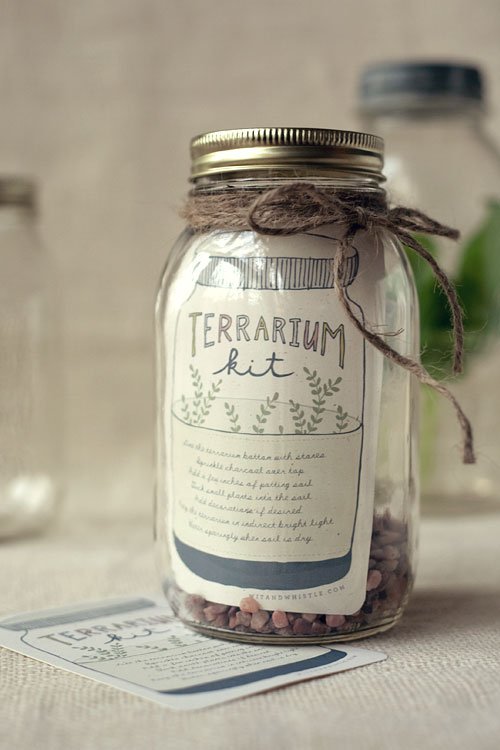
Gift a DIY Terrarium Kit


If you don't have time to plant your terrarium gifts - why not package the supplies and gift it as a DIY craft?  Whit & Whistle has an adorable graphic to print and include in your terrarium vessel.